
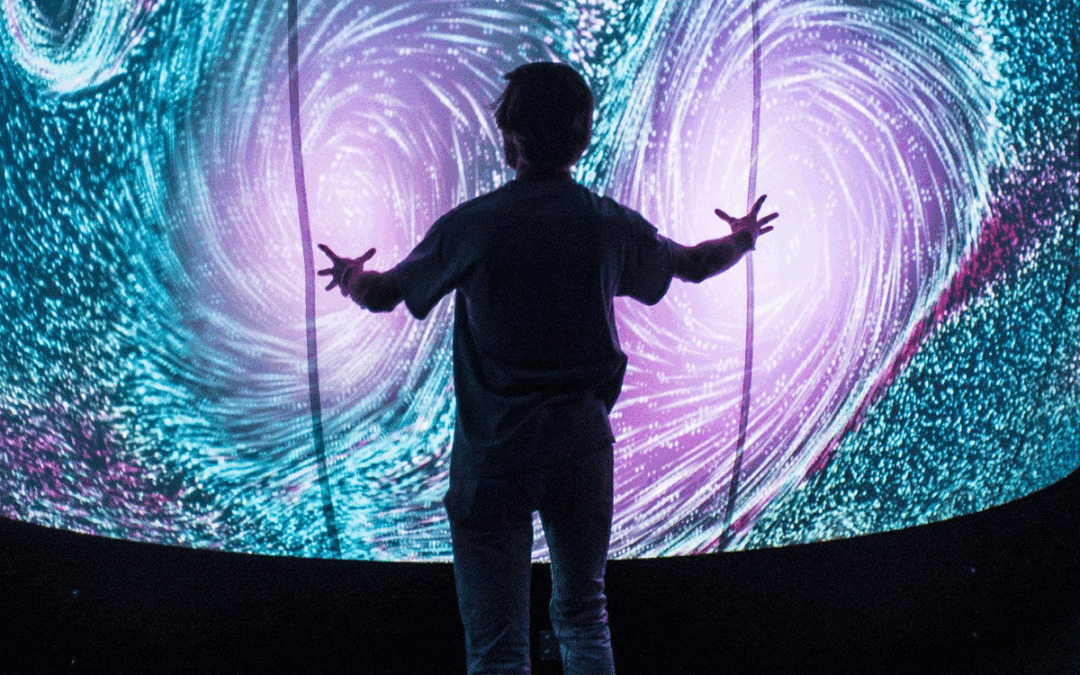
Interactive art invites people to do more than observe. It asks them to engage. In the Bay Area, this approach has become central to how artists build community, challenge perception, and create shared experiences. At Shamanist.Art, we see interactivity as a way to dissolve the boundary between artist and audience.
Recently, the Exploratorium in San Francisco launched a series of interactive exhibits focused on human perception and environmental awareness. One installation used motion sensors to trigger sound and light patterns based on how visitors moved through the space. Another allowed participants to shape digital landscapes using hand gestures.
Our own interactive pieces follow similar principles. Whether it’s a sanctuary installation that responds to touch or a public altar that invites written offerings, we design with participation in mind. Materials are chosen for their tactile qualities – textured wood, layered fabrics, natural pigments and layouts are shaped to guide movement and interaction.
Key elements we focus on:
- Sensory engagement – sound, texture, light, and movement
- Spiritual symbolism – drawn from global traditions and local stories
- Environmental integration – installations that respond to natural surroundings
Interactive art is not about spectacle. It’s about presence. It’s about giving people a role in the creative process — whether through movement, reflection, or ritual. In Marin and across the Bay, we continue to explore how art can be a conversation, not just a statement.